Hue Hijack
2021
ReactMUIExpress.jsAPISecurityWhat I Built
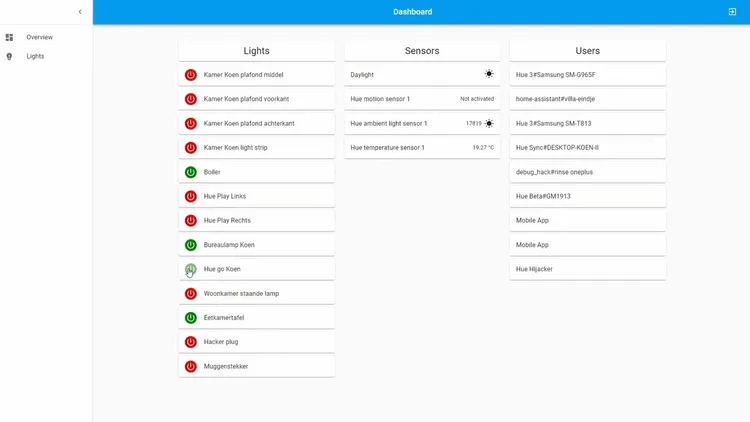
The Philips Hue Bridge talks to your lights over a local network using an HTTP-based API, and it turns out it doesn’t take much to abuse it. I reverse-engineered the control protocol, identified attack vectors, and built a web interface to simulate them in a controlled environment.
The frontend is React, the backend is Express.js acting as a proxy to the Bridge, and everything is documented in the report below.
What I Learned
- How the Hue Bridge works internally: the pairing flow, API endpoints, and what’s actually authenticated
- Why local-network IoT devices are hard to secure (convenience almost always wins over security)
- How to document a security finding clearly for both technical and non-technical readers
Abstract
The Philips Hue lamp is one of the most popular smart home devices around, but most users have no idea what’s happening on their local network when they change a light’s color. This project looks at the protocol between the Hue app and the Bridge, identifies weaknesses, and proposes mitigations.